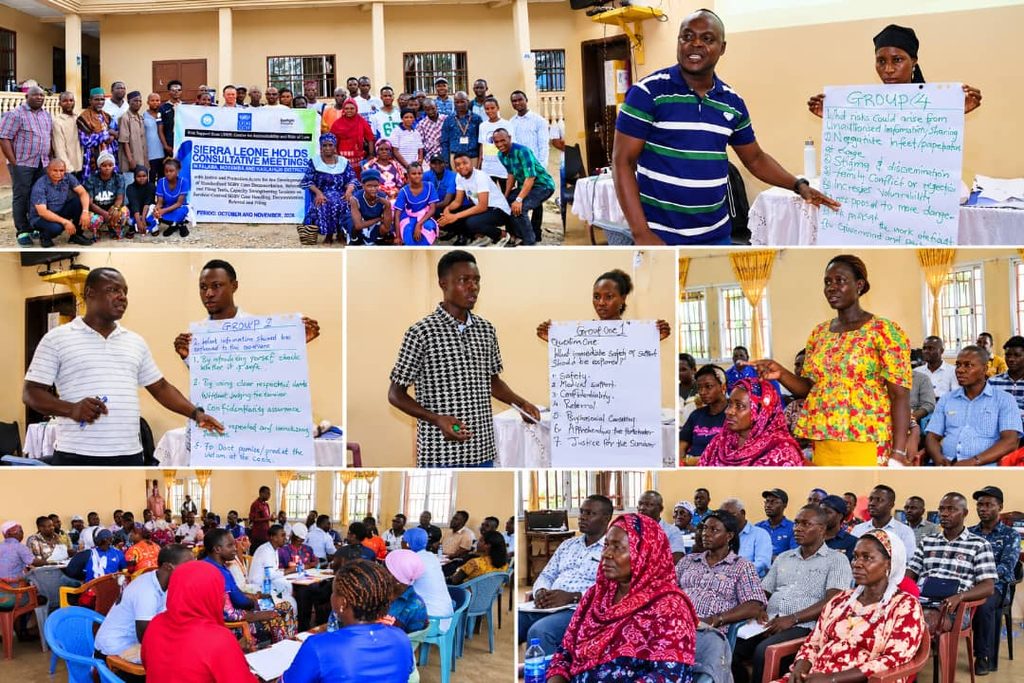
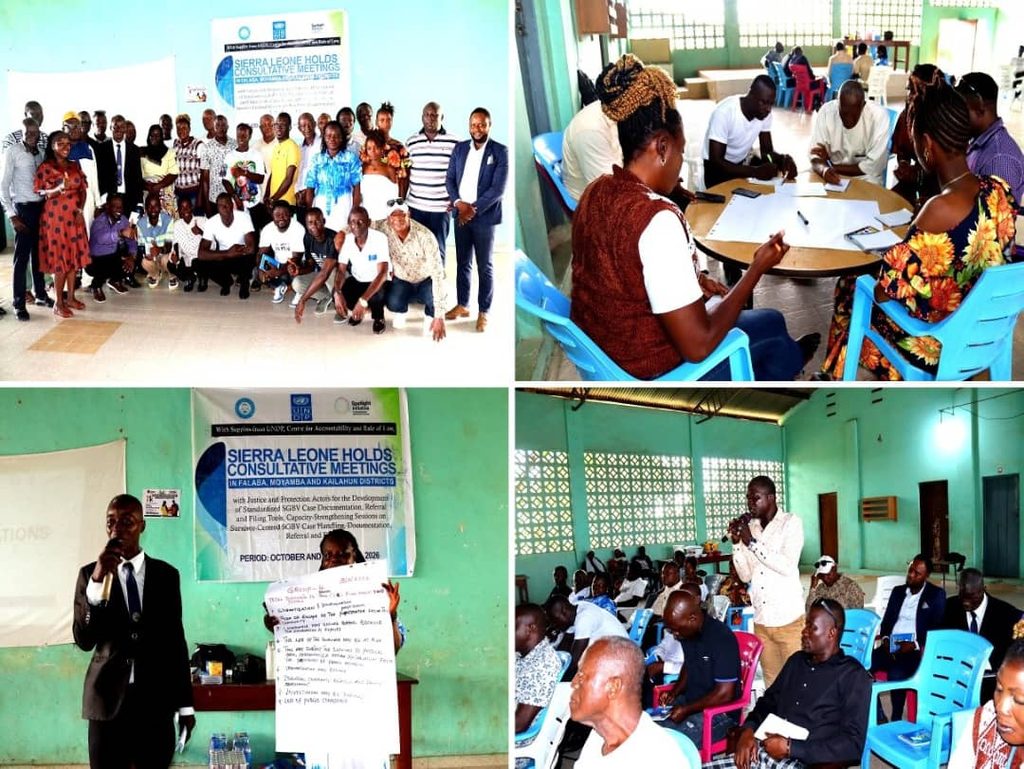
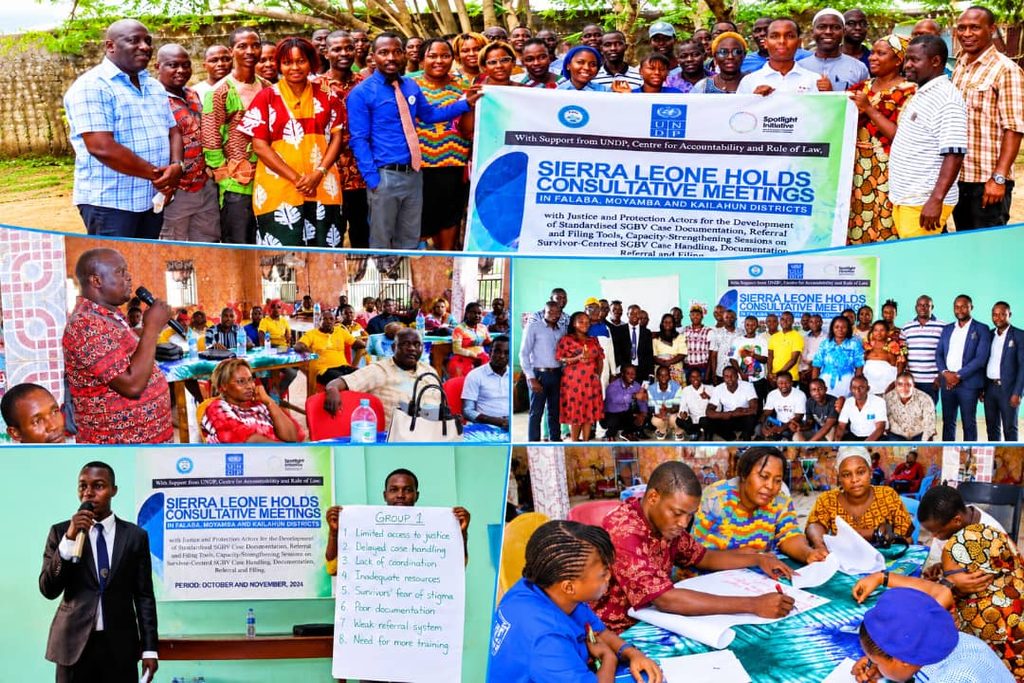
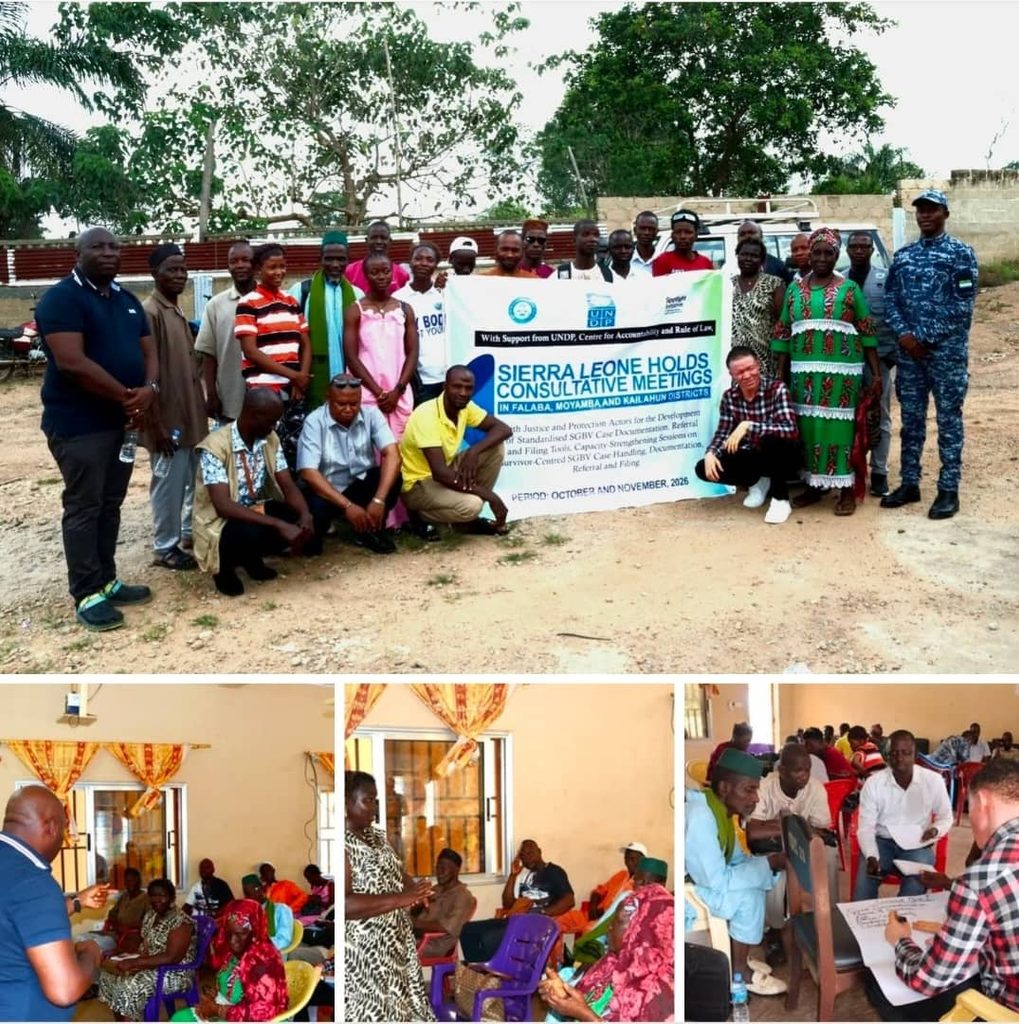
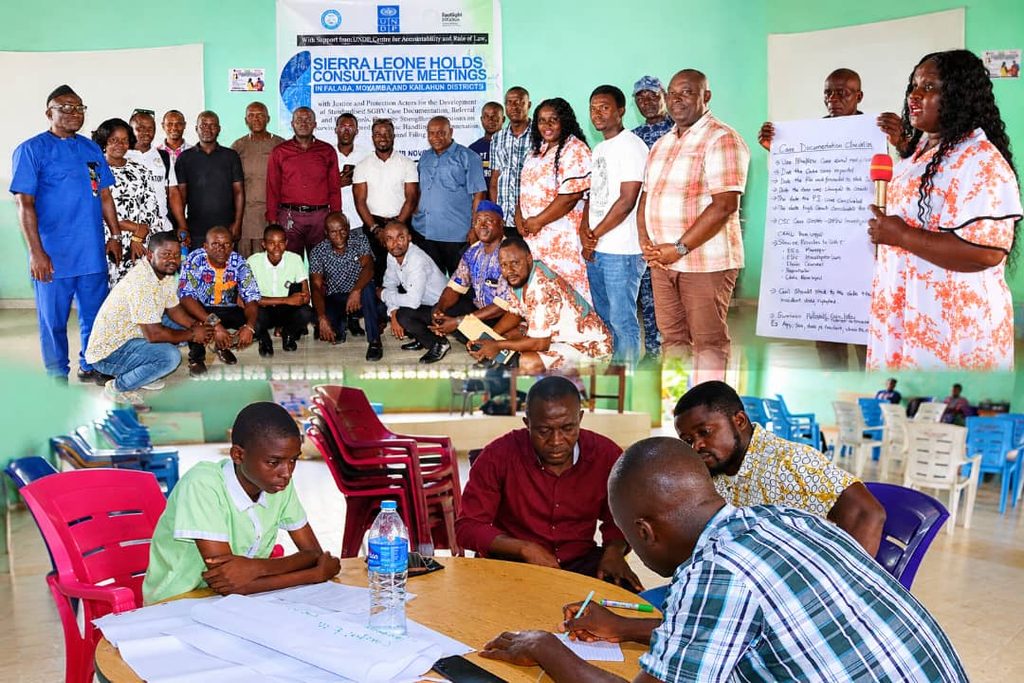
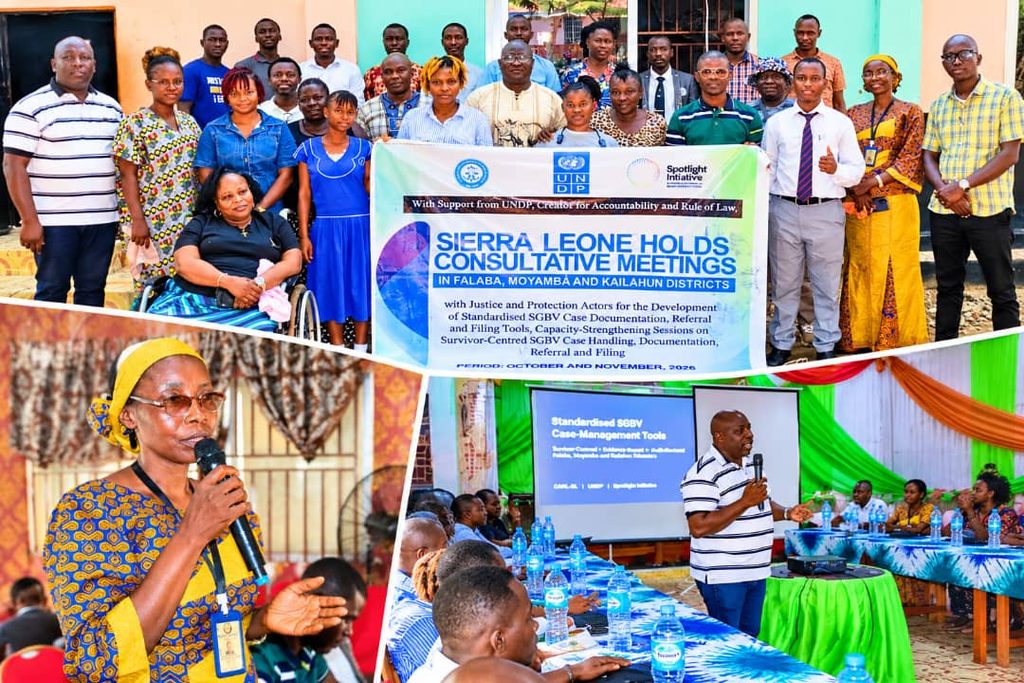
The Centre for Accountability and Rule of Law – Sierra Leone (CARL-SL), with support from the UNDP-funded Spotlight Initiative 2.0 Response, has strengthened the capacity of more than 150 justice, security and protection actors through a series of capacity-building sessions conducted in Falaba, Kailahun and Moyamba Districts
The initiative aimed to enhance participants’ knowledge and practical skills in preventing and responding to Sexual and Gender-Based Violence (SGBV), with particular emphasis on survivor-centred case management, effective case documentation, referral pathways, protection mechanisms and improved coordination among relevant service providers.
The training brought together a diverse range of stakeholders involved in SGBV prevention, response and access to justice. Participants included Family Support Unit (FSU) personnel, representatives from the Ministry of Social Welfare, Gender and Children’s Affairs, Ministry of Social Welfare, civil society organisations, local authorities, local court officials, members of the judiciary, pupils, Community-Based Organisations and networks, teachers and representatives of persons with disabilities, among other relevant actors.
Through interactive sessions, experience-sharing and practical discussions, participants strengthened their understanding of effective SGBV case handling, institutional responsibilities, appropriate documentation, timely referrals and the importance of protecting survivors’ dignity, safety, privacy and confidentiality.
By bringing together stakeholders from different sectors, CARL-SL sought to strengthen institutional collaboration, promote a shared understanding of responsibilities and improve coordination across the SGBV response mechanism. Particular attention was given to ensuring that survivors, especially women, girls and other vulnerable groups, can access justice and protection services without discrimination, stigma or unnecessary barriers.
Through these capacity-strengthening interventions, CARL-SL continues to contribute to building more coordinated, responsive and survivor-centred justice and protection systems, while advancing access to justice and strengthening institutional responses to SGBV across the three target districts.
Centre for Accountability and Rule of Law, Sierra Leone (CARL-SL) with support from United Nations Development Program (UNDP) implemented the “Enhancing Access to Justice for Vulnerable Groups and Advancing People-centered Justice Reforms for SGVB Survivors in Falaba Moyamba, and Kailahun districts project”.
In Kailahun District, survivors of Sexual and Gender-Based Violence (SGBV) often face significant barriers to accessing justice and support, including stigma, discrimination, fear and social isolation. For many, the trauma of abuse is compounded by the silence and rejection they experience within their communities.
For Hawa a 17 year old, these challenges were a painful reality. Following an experience of sexual violence, she found herself ostracised and without a safe environment in which to seek help or begin her recovery. However, through the support provided under the project, Hawa accessed essential medical care, psychosocial counselling and legal representation, enabling her to begin rebuilding her life while pursuing justice. In a space of three months, her perpetrator was convicted, marking what was reported as a historic milestone for her chiefdom and demonstrating the importance of survivor-centered support and effective access to justice.
Today, Hawa has transformed her painful experience into a source of strength and inspiration. She now serves as a youth peer educator, engaging young people and raising awareness about SGBV prevention, survivors’ rights and the importance of speaking out against sexual violence. Through her advocacy, she has reached more than 800 young people, encouraging greater awareness, responsibility and community action against SGBV.
Hawa’s journey demonstrates that when survivors receive timely support, protection and access to justice, they can move beyond victimisation and become powerful advocates for change within their communities. Her transformation from a survivor who once faced stigma and isolation into a youth advocate illustrates the far-reaching impact of survivor-centred interventions.
Nevertheless, Hawa’s experience also highlights the reality that many survivors continue to suffer in silence, unable to access the medical, psychosocial, legal and protection services they need. Expanding these services and strengthening community awareness remain critical to ensuring that no survivor is left behind.
Her story is a reminder that justice restores hope, support rebuilds confidence, and empowered survivors can become agents of lasting community change.
The Centre for Accountability and Rule of Law – Sierra Leone (CARL-SL), with support from the United Nations Development Programme (UNDP)-funded Spotlight Initiative 2.0 Response, is strengthening institutional collaboration and coordination among justice, security and protection actors to improve the management of Sexual and Gender-Based Violence (SGBV) cases across Falaba, Kailahun and Moyamba districts.
The initiative forms part of CARL-SL’s broader commitment to promoting access to justice, strengthening accountability within justice and protection institutions, and ensuring that survivors of sexual and gender-based violence receive appropriate, timely and dignified responses throughout the justice process. It recognizes that addressing SGBV requires more than the existence of laws and institutional structures; it demands effective coordination, consistent case-management procedures, appropriate documentation, functional referral systems and a survivor-centered approach that places the rights, safety and wellbeing of survivors at the heart of every intervention.
As part of this intervention, CARL-SL has convened stakeholder consultative engagements across the three target districts and facilitated discussions on existing SGBV case-management practices and support the development of standardised tools that will guide relevant institutions in handling cases more effectively. The consultations brought together key actors from the justice, security and protection sectors, providing an opportunity for institutions and frontline practitioners to examine their respective roles, share practical experiences and collectively identified challenges that affect the effective management and prosecution of SGBV cases.
The engagements are particularly important in addressing some of the persistent challenges associated with SGBV case management, including gaps in case documentation, inconsistencies in the preparation and handling of case files, weaknesses in referral pathways, limited coordination among relevant institutions, and challenges relating to case follow-up. These gaps can undermine the quality of institutional responses, delay access to justice and expose survivors to additional risks, including unnecessary delays, repeated questioning, and breaches of confidentiality and experiences that may further compound their trauma.
Through these consultative processes, CARL-SL has created space for stakeholders in each district to critically assess existing practices and contribute practical recommendations towards developing standardised case-management tools that are responsive to institutional realities and the needs of survivors. The proposed tools are intended to provide clearer guidance on the handling, documentation, referral, preparation and follow-up of SGBV cases, while promoting greater consistency and accountability among the institutions responsible for responding to such cases.
Participants were drawn from different stakeholders, including the Sierra Leone Police/family Support Units, local authorities, pupils, Civil Society organizations, Ministry of Social Welfare, Ministry of Gender and Children’s Affairs, Rainbow Initiatives, Media, etc. the activities were held in Mongo-Falaba district, Kailahun town, Kailahun district and in Moyamba town, Moyamba district.
A central consideration throughout the process is the need to strengthen a survivor-centered approach to SGBV case management. Such an approach requires that survivors are treated with dignity, respect and sensitivity, and that their safety, privacy, confidentiality and informed choices are protected at every stage of the response process. It also requires institutions and service providers to minimise practices that may expose survivors to further harm or discourage them from pursuing justice. By incorporating these principles into the proposed tools, CARL-SL seeks to contribute to a more responsive and supportive institutional environment for survivors of sexual and gender-based violence.
Beyond identifying operational gaps, the consultations are also intended to strengthen inter-agency relationships and promote a shared understanding of the responsibilities of different actors within the SGBV response chain. Effective case management depends on the ability of justice, security and protection institutions to communicate, collaborate and coordinate their interventions without compromising the rights and interests of survivors. Strengthening these relationships is therefore essential to ensuring that cases are handled systematically, referrals are appropriately managed, and necessary actions are taken to advance investigations and access to justice.
The recommendations and technical inputs generated through the stakeholder consultations across Falaba, Kailahun and Moyamba districts will inform the preparation of draft standardised SGBV case-management tools. These draft tools will subsequently undergo further technical review and validation involving relevant stakeholders to ensure that they are practical, contextually appropriate and capable of supporting improved institutional performance. The review and validation process will also provide an opportunity to refine the proposed guidelines and strengthen stakeholder ownership of the tools before their eventual application.
For CARL-SL, this intervention represents an important step towards addressing institutional and coordination challenges that affect access to justice for survivors of sexual and gender-based violence. It reflects the organisation’s continued commitment to working with relevant state and non-state actors to promote accountability, strengthen justice delivery systems and advance the protection of vulnerable groups, particularly women and girls who are disproportionately affected by SGBV.
With support from the UNDP-funded Spotlight Initiative 2.0 Response, CARL-SL remains committed to facilitating constructive engagement among relevant institutions and supporting the development of practical mechanisms that can contribute to more effective, coordinated and survivor-centred responses to SGBV across the three target districts.
Ultimately, the success of efforts to address sexual and gender-based violence depends not only on the availability of legal and policy frameworks but also on the capacity, commitment and coordination of the institutions responsible for implementing them. By bringing key stakeholders together to identify gaps, develop common standards and strengthen institutional collaboration, CARL-SL is contributing to the broader effort to ensuring that survivors are treated with dignity, their rights are protected, and access to justice is strengthened.
The Centre for Accountability and Rule of Law – Sierra Leone (CARL-SL) expresses grave concern over the reported withholding of results for 47,524 candidates in the 2026 West African Senior School Certificate Examination (WASSCE). CARL-SL considers the scale and nature of the reported irregularities a serious national concern that demands urgent attention from the education authorities and, where potential corruption or abuse of office is indicated, the Anti-Corruption Commission (ACC).
According to figures announced by the Minister of Basic and Senior Secondary Education, the withheld results comprise 26,735 female candidates and 20,719 male candidates. The Ministry-reported summary lists 47,525 alleged malpractice cases across 13 categories, including social media-related offences, collusion, mobile phone offences, written materials, impersonation and cases involving candidates reportedly absent while scripts were submitted.
The reported figures raise questions that cannot be answered by placing responsibility on candidates alone. They require a thorough iinvestigation of the conduct of examination personnel, the adequacy of supervision, the effectiveness of school-level controls and the accountability of institutions responsible for administering and safeguarding public examinations.
One particularly troubling category concerns candidates who were reportedly absent but whose examination scripts were submitted. This raises fundamental questions about the administration and supervision of examination centres.
If a candidate was absent, who accepted, registered or submitted a script in that candidate’s name? What checks were conducted by invigilators and centre supervisors? Were attendance registers, seating plans, script labels and examination records properly reconciled? Were the relevant officials interviewed, and have any failures or possible misconduct been identified?
If the evidence establishes that a script was submitted in the name of an absentee, the investigation must determine whether this resulted from an administrative error, negligence, deliberate falsification, collusion or another form of misconduct. The public deserve a clear explanation based on evidence, not speculation.
The other reported categories equally raise important questions.
Social media-related offences: How were answers allegedly obtained or distributed? Were communications traced to individual candidates, examination personnel or external actors? Were any school officials or other persons found to have facilitated the circulation of answers? What safeguards were in place to prevent unauthorised access to examination centres?
Collusion: Did the alleged collusion occur between candidates in the same examination hall, across different centres, or through an organised network? What evidence distinguishes deliberate collusion from similarities that may have other explanations? Were invigilators or supervisors alerted to suspicious conduct, and what action did they take?
Mobile phone offences and written materials: How were prohibited devices or materials brought into examination halls? Were the required searches and examination protocols followed? Were breaches reported promptly, and were officials held accountable where evidence indicated that they knowingly permitted or facilitated violations?
Impersonation, multiple handwriting and multiple answer booklets: What verification procedures failed or were tried? Who was responsible for checking candidate identities and handling examination scripts? Were these isolated cases or evidence of weaknesses that affected multiple centres?
These are legitimate investigative questions. The existence of a recorded category does not itself prove that corruption occurred or establish the responsibility of any individual. This is precisely why transparent, independent and evidence-based investigations are necessary.
A direct call to the Anti-Corruption Commission
CARL-SL calls on the ACC to investigate any credible indications of corruption, bribery, collusion, falsification of records, abuse of office or deliberate interference with examination administration arising from the 2026 WASSCE examination. CARL-SL recognises that the ACC should not assume that every examination irregularity is a corruption offence. Examination malpractice and administrative failures may fall under different legal and disciplinary frameworks. The Commission should coordinate, as appropriate, with WAEC, MBSSE, civil society and other competent institutions.
Accountability must extend beyond candidates
The reported scale of the irregularities demands an examination of the entire chain of responsibility. Candidates who deliberately violate examination rules must be dealt with in accordance with established procedures. However, where the evidence points to negligence, collusion or misconduct by invigilators, school administrators, examination personnel or other officials, those responsible must also be held accountable through the appropriate legal and disciplinary measures.
It would be unacceptable for a system to impose consequences on candidates while leaving unanswered questions about the conduct of adults and institutions entrusted with the supervision and protection of the examination process.
CARL-SL therefore calls on MBSSE and WAEC to publish a clear account of the safeguards used during the 2026 examination, controls applied when scripts were collected and submitted, and measures taken to investigate possible failures of supervision.
CARL-SL urges the ACC to act promptly where potential corruption is indicated, MBSSE and WAEC to provide transparent answers, and all responsible institutions to implement practical safeguards against recurrence.
The integrity of Sierra Leone’s education system must be protected through evidence, accountability, fairness and decisive institutional action.
The Centre for Accountability and the Rule of Law – Sierra Leone (CARL-SL) expresses grave concern over the ongoing industrial dispute between the Government and the Union of Academic Staff Associations (UASA), which has disrupted academic activities in public tertiary institutions and created uncertainty for university students.
CARL-SL recognises the importance of fair remuneration, decent working conditions and professional dignity for lecturers. However, the continuing dispute raises serious concerns about the educational, social and economic consequences for students and the future of higher education in Sierra Leone.
Students are bearing the consequences of a dispute they did not create. Interruptions to lectures can leave students behind on course content, disrupt preparation for examinations, delay research and practical work, and create uncertainty around graduation dates. Students approaching the end of their programmes may face delayed entry into employment, postgraduate studies or other professional trainings.
The disruption also places additional pressure on parents who have invested huge resources in tuition, accommodation, transportation and other educational expenses. Where academic calendars are extended or revised, some students may incur additional costs and face difficulties adjusting their personal, family and work commitments. Prolonged uncertainty can also affect students’ motivation, emotional well-being and confidence in the reliability of the university system.
The consequences extend beyond individual students. Repeated interruptions to teaching and learning can place pressure on universities to compress academic programmes, reschedule examinations and reorganise teaching periods. If lost instructional time is not properly recovered, students may struggle to master essential knowledge and skills. Disruptions to research, supervision and practical training may also affect academic output and the quality of graduates entering the workforce.
Over time, persistent instability in public tertiary education risks weakening public confidence in universities and undermining Sierra Leone’s efforts to develop the skilled workforce needed in education, health, law, science, technology and other critical sectors. The protection of academic staff welfare and the continuity of students’ education must therefore be treated as interconnected priorities.
In its statement of 9th October, 2026, the Ministry of Technical and Higher Education maintained that negotiations were ongoing when the strike began, and questioned the legal basis of the industrial action. In its response of 10th October, 2026 UASA argued that negotiations had not produced a concrete salary offer, and called for substantive engagement. CARL-SL urges both parties to move beyond public exchanges and commit to meaningful negotiations aimed at achieving a timely and sustainable resolution.
CARL-SL respectfully calls on His Excellency the President to provide urgent leadership, facilitate constructive negotiations and ensure that clear proposals and timelines are agreed upon. UASA and the relevant academic staff associations must also remain committed to good-faith engagement and a resolution that recognises lecturers’ legitimate concerns while protecting students’ interests.
CARL-SL further urges university administrations to communicate clearly with students about the status of academic activities and examination schedules, and to develop practical plans to recover lost teaching time. Such plans should protect academic standards and minimise avoidable academic or financial penalties for students affected by the disruption.
CARL-SL calls on all parties to place the national interest above prolonged confrontation. Lecturers’ welfare matters, students’ education matters, and Sierra Leone’s future depends on a stable and effective higher education system. The Government and UASA must act urgently to resolve the dispute, restore academic activities and prevent further harm to students and the country’s education sector.